A Tree Fell on My Roof. What Do I Do First?
A Tree Fell on My Roof. What Do I Do First?
 Storm damage is one of the few roofing problems where the first hour actually matters
It’s the middle of the night. Rain coming down sideways, wind that’s been howling for an hour. Then a crack and a thud that shakes the whole house.
You grab a flashlight and find a limb through the ceiling. Drywall dust in the air, insulation everywhere, water already running down the wall onto the floor.
Your first instinct is to fix it right now. Ladder, tarp, chainsaw.
Put it down.
In Michigan we take these calls every spring and fall — thunderstorm season, and the long stretch of wet snow and wind that takes out weakened limbs. The homeowners who come through it best are the ones who did almost nothing for the first hour except the right four things.
First: Get Out of the Room
If a tree has punched through your roof, sagged a ceiling, or cracked a wall, the structure of your house is compromised in ways you can’t assess in the dark with a flashlight.
Don’t stand under it with a bucket. A saturated ceiling holds an enormous amount of weight, and drywall gives way all at once.
Get everyone out of that room. If the damage is significant — a visible sag across the ceiling, a wall that’s shifted, a roofline that’s clearly deformed — get everyone out of the house and call from outside. You can assess the drywall in the morning. You can’t un-collapse a ceiling.
Second: Assume There Are Live Wires
 A tree that reached your roof very likely reached the service line first
That tree didn’t fall through empty air.
If it came down across your property, there’s a real chance it took the electrical service drop with it — or is resting on it. In the dark, in the rain, tangled in branches, you will not see that wire until you’re touching it.
This is the part of the night that actually kills people. Not the roof damage. The wire.
Keep everyone well back from the tree and anything touching it, including wet ground near the base. Call DTE or Consumers Energy — whoever serves your address — before you call anyone else. Report a downed line as an emergency. They’ll de-energize it.
Don’t move branches. Don’t let anyone “just check.” Wait for the utility.
Third: Document From the Ground
This is the only real work you have tonight, and it’s worth doing well.
From safe ground, take:
- Wide shots showing the tree, the house, and where they meet — enough context that an adjuster can see the whole picture
- Close-ups of the impact point from outside, as much as you can see safely
- Interior photos of the hole, the ceiling, the water, and every damaged item
- Video, walking through slowly and narrating what you’re seeing
- Timestamps — most phones do this automatically, but confirm
Photograph damaged contents before you move them. Furniture, electronics, anything the water reached. Once you’ve moved it, you’ve lost the proof of where it was.
Do not throw anything away yet, including the tree debris. Adjusters want to see it.
Fourth: Call It In
Call your insurance carrier and open the claim. Most have 24-hour claim lines even when their offices are closed.
Ask three things while you have them:
- What’s my deductible on this?
- Does my policy cover emergency mitigation, and is there a limit?
- Do you need approval before I have someone tarp it?
That third question matters. Which brings us to the part that costs people the most money.
The Mitigation Trap
Here’s what catches homeowners off guard.
Your policy almost certainly covers the sudden damage — the tree, the hole, the water that came in that night. Standard homeowners coverage handles impact from falling objects.
But nearly every policy also puts a duty on you to prevent further damage after the event. That’s the mitigation clause. And it cuts both ways.
If you do nothing and it rains again three days later and ruins another ceiling, the carrier can argue that second round of damage was preventable and decline it.
If you do it badly, you’re in the same position. A hardware-store poly tarp thrown over a hole and weighted with a couple of bricks will not survive the next gust. When it lifts at 3 AM and the roof takes on another night of water, the carrier can treat that as failed mitigation.
Professional emergency tarping is different work than it looks like. The tarp gets furred and fastened to sound structure, sealed at the edges, and pitched so water runs off instead of pooling. It’s meant to survive weeks of weather, not a calm afternoon. Keep the receipt — mitigation costs are typically reimbursable under the claim.
The short version: act promptly, and have it done properly. Both halves matter.
What You Can’t See From the Ground
 The shingles are the cheapest thing a falling tree breaks
A tree doesn’t just break shingles. Shingles are the least expensive part of what’s in front of you.
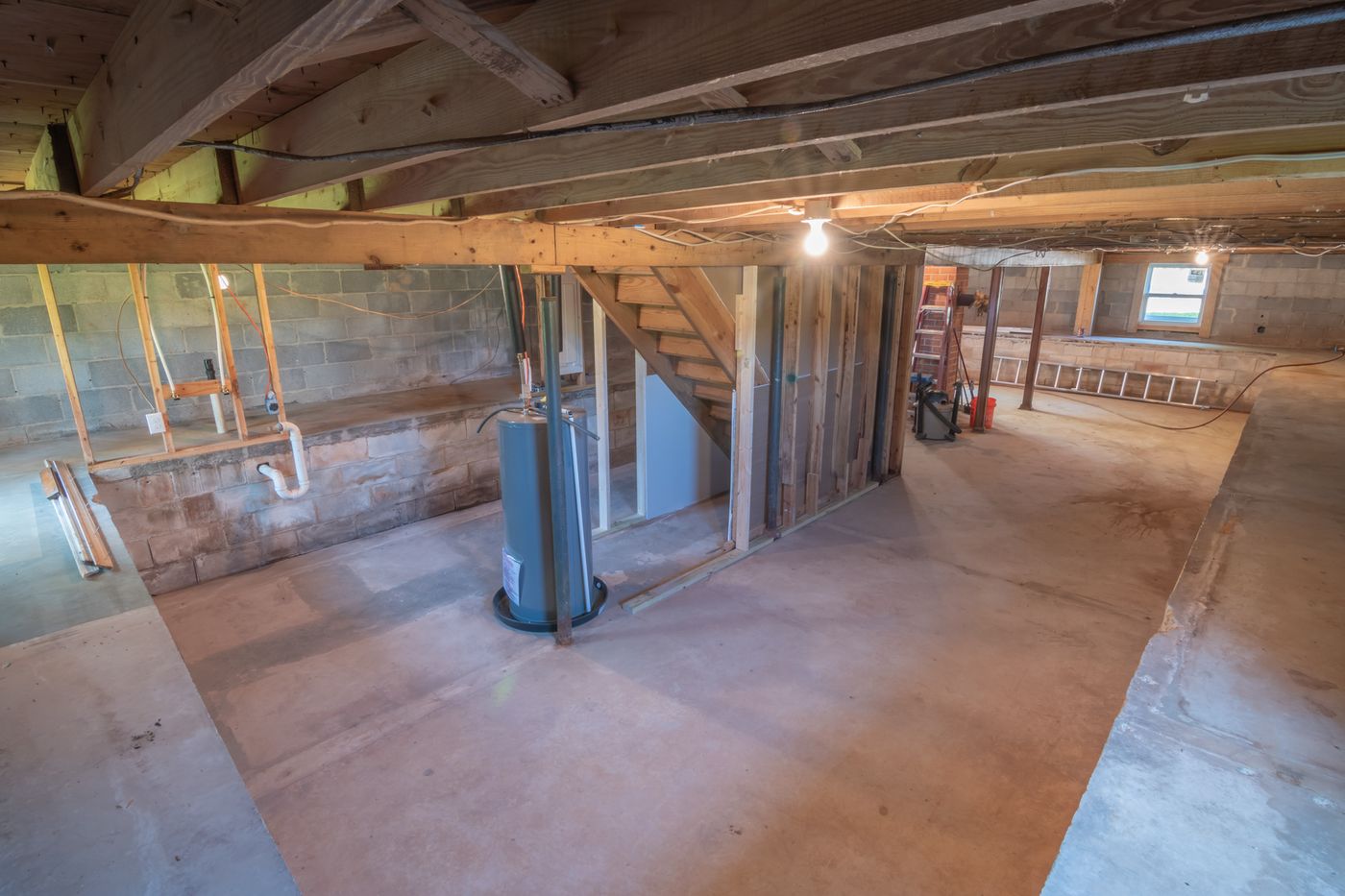
Impact load travels. A limb heavy enough to penetrate the roof can crack rafters well away from the hole, split the decking along the grain where nothing is visible from outside, shift or fracture truss members, and knock framing out of plane. Sheathing can be broken under shingles that still look fine.
This is why “have someone drag the branch off and patch the shingles” is a genuinely bad plan. The patch looks finished. The compromised framing is still carrying your roof, and it will keep carrying it until a heavy snow load in February finds the weak point.
Structural repair caught now is a repair. Found later, after a season of water in the wall cavity and a winter of snow load on cracked framing, it’s a rebuild.
Any competent assessment of tree impact includes going into the attic and inspecting the framing directly, not just looking at the roof from a ladder.
Who Pays for the Tree Removal?
The general rule, and it surprises people:
If the tree hit a covered structure — your house, garage, shed, fence — removal is typically covered, usually with a per-claim cap.
If it just fell in your yard and hit nothing, removal is usually your expense. Insurance covers damage, not landscaping.
If it was your neighbor’s tree, it’s generally still your own policy that responds when it lands on your house. The exception is when the neighbor was on notice that the tree was dead or hazardous and did nothing — then their liability may come into play. That’s a conversation for your adjuster, not your neighbor, and definitely not at 2 AM.
Cleanup of debris that didn’t hit anything is often excluded even when the rest of the claim is paid. Read the removal limit on your policy.
Frequently Asked Questions
Should I move the tree myself? No. Not until the utility has cleared the lines, and not before it’s been photographed. Beyond the electrical risk, a limb resting on a damaged roof may be the only thing currently holding load in place. Removing it wrong can drop more of the roof.
Can I stay in the house? Depends on the damage. If the affected room is isolated and the rest of the structure is sound, often yes. If there’s ceiling sag, wall movement, compromised electrical, or you can see daylight through structural framing, get out and have it assessed before going back in. Most policies include loss-of-use coverage for exactly this.
How fast do I need to file? Quickly. Policies carry prompt-notice requirements, and delay gives the carrier room to argue the damage worsened on your watch. Call the night it happens or first thing the next morning.
The adjuster’s estimate seems low. Is that final? No. An adjuster’s initial scope is an opening position. They’re working from a visual inspection, often without attic access, and structural damage from impact is exactly the kind of thing a fast walkthrough misses. You’re entitled to have a contractor document what they found and submit a supplement.
Should I use the contractor my insurance recommends? You can, but you’re not required to. In Michigan you choose your own contractor. A preferred-vendor list is a convenience, not an obligation.
What if it’s just a big limb, not the whole tree? Same process. Weight and velocity do the damage, not the size of what’s left in the yard. A heavy limb off a mature oak can crack framing as effectively as a trunk.
When You’re Ready to Call Someone
Once everyone’s safe, the utility is on the way, and you’ve photographed what you can — that’s when a roofer is useful.
Kelly Construction has handled Michigan storm damage since 1992. Licensed residential builder, fully insured, BBB accredited. We coordinate with tree removal, secure the opening properly so it holds, inspect the framing from the attic side to find what the impact actually did, and document the full scope for your claim.
Insurance restoration is a core part of our work, not something we picked up after the last big storm. Same family, same phone number, thirty-three years.
Call (248) 853-2800 or book an inspection online.
Serving all of Michigan, concentrated in Oakland, Macomb, Wayne, Lapeer, Livingston, and St. Clair counties.
Related: Our roofing services · Get a quote
Have a leak, a stain, or a roof you're not sure about?
Kelly Construction has served Michigan since 1992. No-obligation inspections.