
What Does a Kitchen Remodel Actually Cost in Michigan? (2026)
What Does a Kitchen Remodel Actually Cost in Michigan?
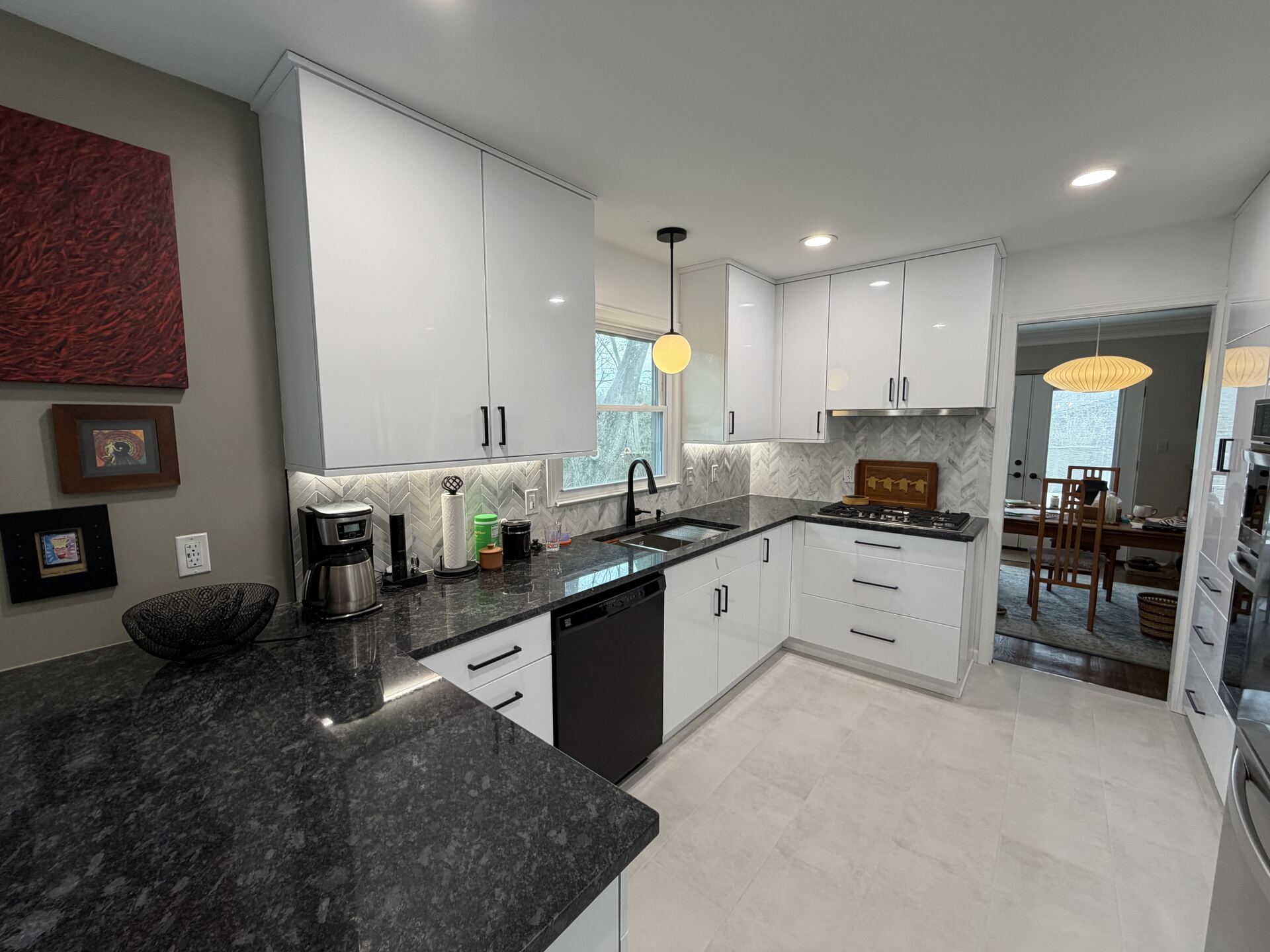 A finished Kelly Construction kitchen — the part everybody pictures, planned by the part nobody does
Nobody wakes up wanting a kitchen remodel. It builds.
The drawer that hasn’t closed right in two years. The oven you have to hold shut. The counter that’s fine except you can’t put a cutting board anywhere useful. Then one Saturday you’re standing there with coffee doing math in your head, and you go looking for a number.
And every article you find says the same unhelpful thing: between $15,000 and $80,000, depending.
So here’s the actual breakdown, what separates those tiers, and the specific decisions that move a kitchen from one bracket to the next in Southeast Michigan.
The Three Real Tiers
Kitchen pricing isn’t a smooth curve. It clusters, because certain decisions bring whole categories of work with them.
Refresh — roughly $18,000 to $35,000. Layout stays exactly where it is. Sink, range, and fridge don’t move. You’re getting cabinet refacing or new cabinets in the existing footprint, new counters, new backsplash, new sink and faucet, paint, and usually flooring. No walls touched, no plumbing relocated, minimal electrical beyond adding outlets to meet current code.
This is the best value in remodeling and the tier most homeowners underestimate. A kitchen with a layout that already works, done in quality materials, reads as a full renovation to everyone who walks in.
Full renovation — roughly $40,000 to $75,000. Gut to the studs. New cabinets, upgraded counters, new appliances, new flooring, updated lighting, and moderate layout changes — relocating the sink, adding an island, widening a doorway. Electrical gets brought current, plumbing gets moved, and there’s usually some drywall and trim work at the edges where the old kitchen ended.
Most Michigan kitchen projects that people describe as “a real remodel” land here.
Structural / high-end — $80,000 and up. Taking out a wall, bumping out an exterior, custom cabinetry, high-end appliance packages, moving the kitchen to a different part of the house. Once structure or the building envelope is involved, you’ve added engineering, permits, framing, and sometimes HVAC rerouting to the scope.
Where the Money Actually Goes
Roughly, on a full renovation:
- Cabinets — 30 to 40%. The single biggest line, every time. Stock, semi-custom, and custom are three genuinely different products, not three price points for the same thing.
- Labor — 20 to 30%. Demo, framing, install, finish carpentry, coordination.
- Counters — 10 to 15%. Quartz has largely taken over from granite in this market; the price gap has narrowed a lot.
- Appliances — 10 to 15%. Entirely up to you. This is the one line you fully control.
- Flooring — 5 to 10%.
- Plumbing and electrical — 5 to 10%, and much higher if anything moves.
- Everything else — lighting, backsplash, paint, hardware, permits, disposal.
The useful thing about that list: cabinets and appliances are over half the budget and both are choices, not requirements. Two identical kitchens can be twenty thousand dollars apart based on decisions made in a showroom, not on the job.
The Decision That Costs the Most
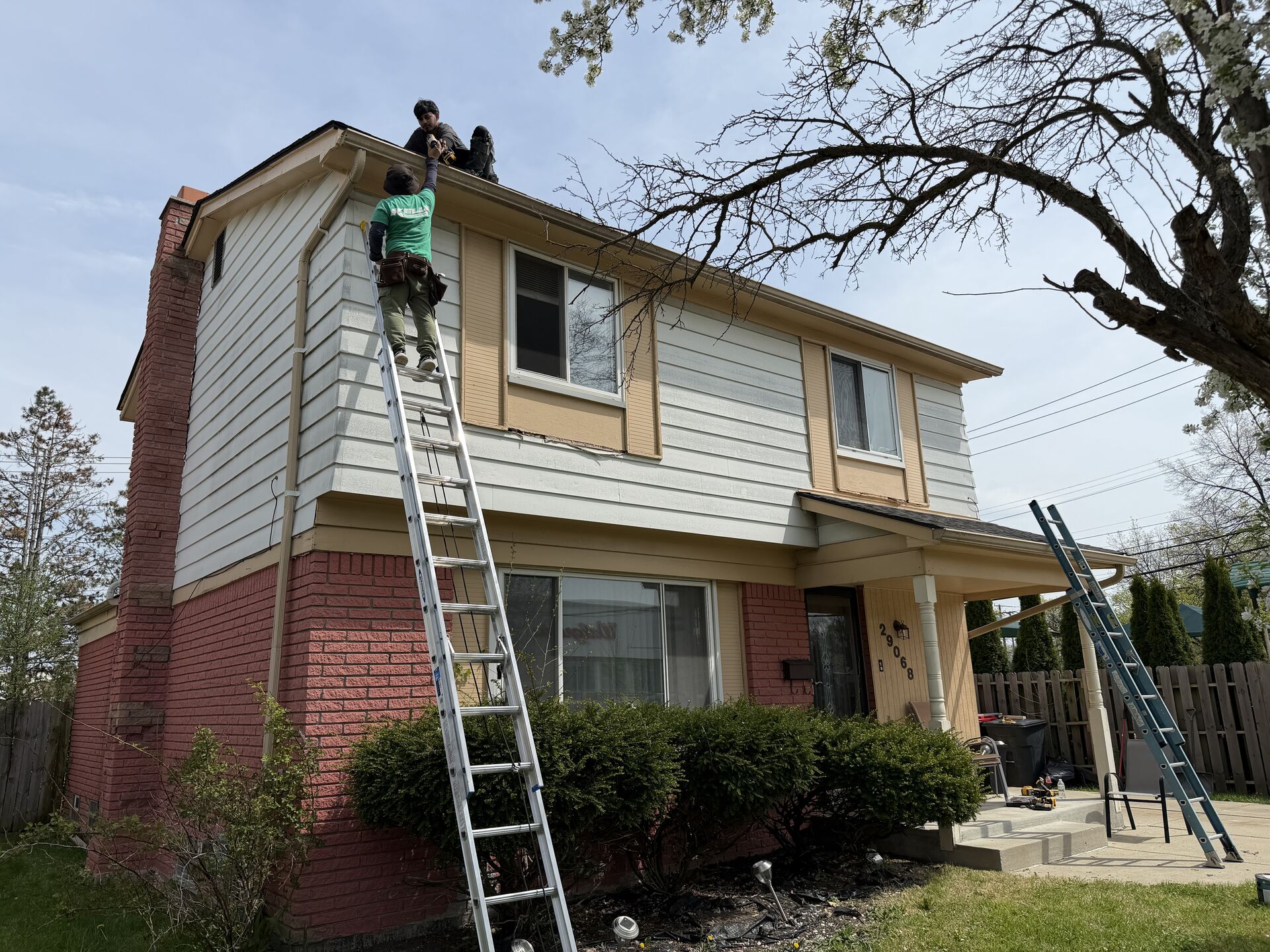 Moving the sink is a plumbing project wearing a kitchen’s clothes
If you want one rule for controlling a kitchen budget, it’s this: moving the plumbing is the expensive decision.
Relocating a sink means opening the floor, rerouting supply lines, and — the part that catches people — re-establishing proper drain slope. Drain lines have to fall at a fixed rate. Move a sink fifteen feet across a room and that slope has to come from somewhere, which can mean cutting joists, dropping a soffit, or working in the ceiling of whatever’s below.
That’s a structural conversation, not a plumbing one. And it’s how a $50,000 kitchen becomes a $70,000 kitchen over a decision that looked cosmetic on a floor plan.
Gas lines for a relocated range are the same story, smaller scale. Electrical is more forgiving — running new circuits is disruptive but rarely structural.
None of this means don’t move the sink. Sometimes the layout genuinely doesn’t work and moving it is the whole point of the project. It just means know what you’re buying before it’s a change order.
What Older Michigan Homes Hide
A lot of housing stock around here was built between the 1920s and the 1970s, and kitchens in those homes tend to have the same surprises behind the cabinets.
Knob-and-tube or ungrounded wiring. Once it’s exposed, it gets brought to code. This isn’t optional and it isn’t cheap, but it’s also not something a contractor invented to pad the bill.
Galvanized supply lines. They corrode from the inside. Everything looks fine until you disturb them, then flow drops or a joint weeps.
Undersized service. Older panels often don’t have capacity for a modern kitchen’s dedicated circuits — range, microwave, disposal, dishwasher, two small-appliance circuits.
Floors that aren’t flat. Old subfloors settle. Cabinets and counters need level; getting there can mean sistering joists or building up the floor.
Water damage under the sink. Slow leaks over decades. Often the subfloor and sometimes the joist below.
Budget 10 to 15% contingency on any kitchen in a home over forty years old. Not because something will definitely turn up — because when it does, a contingency turns a crisis into a line item.
How Long You’ll Be Without a Kitchen
Be realistic about this part, because it’s the thing that actually wears people down.
- Refresh: 3 to 5 weeks
- Full renovation: 6 to 10 weeks
- Structural: 10 to 16 weeks, plus permit and inspection time
Cabinet lead times drive the schedule more than the labor does. Semi-custom is commonly 6 to 10 weeks from order, and custom can run longer. The cabinets should be ordered before demo starts, not after — a kitchen sitting gutted while cabinets are in production is the most common reason a project feels like it’s dragging.
Set up a temporary kitchen somewhere before day one. Microwave, kettle, coffee maker, the fridge relocated to the garage or dining room. It sounds like a small thing in week one and it isn’t by week six.
Reading a Quote Honestly
Three quotes for the same kitchen can vary wildly, and the cheapest one is worth understanding rather than dismissing.
Look for what’s excluded. A quote that doesn’t mention permits, disposal, appliance installation, or electrical upgrades isn’t cheaper — it’s less complete. Those costs don’t disappear, they just arrive later.
Look for cabinet specifics. “New cabinets” is not a scope. Brand, line, box construction, drawer glides, finish. Plywood versus particleboard box construction is a real durability difference and a real price difference.
Look for an allowance structure. Good quotes carry stated allowances for counters, tile, fixtures, and appliances, so you know exactly what you’re working with when you go choose things.
Look for who’s doing the plumbing and electrical. One contractor coordinating licensed trades is a very different experience than managing four separate schedules yourself.
Be careful with a large deposit. A reasonable deposit covers materials and cabinet ordering. A request for most of the project cost up front is worth asking hard questions about.
Frequently Asked Questions
Will I get this money back when I sell? Kitchen remodels are consistently among the better-returning projects, and a mid-range remodel typically recovers more of its cost than a high-end one. But a kitchen that’s dramatically nicer than the rest of the house hits a ceiling set by the neighborhood. If resale is the main driver, mid-range is usually the smarter spend.
Do I need a permit? In most Michigan municipalities, yes — anything involving electrical, plumbing, or structural work is permitted. Cosmetic-only work often isn’t. Your contractor should be pulling permits under their license. Unpermitted work becomes a problem at closing, years later, when you’re least able to deal with it.
Is refacing cabinets worth it? When the boxes are solid and the layout works, absolutely — it’s a fraction of replacement cost for most of the visual change. When the boxes are particleboard that’s swelled, or the layout is the actual problem, refacing is money spent on the wrong thing.
Can I live in the house during it? For almost every kitchen, yes. It’s dusty and loud and inconvenient, but the kitchen gets sealed off and the rest of the house stays livable. Structural projects are the occasional exception.
Should I buy my own appliances? You can, and many people do. Just confirm dimensions and specs with your contractor before ordering, and confirm delivery timing. An appliance that arrives three weeks late — or an inch too wide — holds up the whole finish schedule.
What if I only have $25,000? Then you keep the layout and spend it on things you touch every day. Quality cabinets in the existing footprint, good counters, proper lighting. A well-executed refresh beats a stretched full renovation with corners cut in it, and it’s a far better use of the money.
Get a Number You Can Actually Plan Around
The honest starting point isn’t a catalog. It’s someone standing in your kitchen telling you what your layout will and won’t allow, and what’s likely behind the walls in a house of that age.
Kelly Construction has remodeled Michigan kitchens since 1992. Licensed residential builder, fully insured, BBB accredited. We handle the plumbing and electrical coordination so you’re dealing with one contractor, not four — and we’ll tell you straight when the right answer is keeping the layout and putting the money into finishes.
Free, no-obligation consultation and estimate.
Call (248) 853-2800 or book a consultation online.
Serving all of Michigan, concentrated in Oakland, Macomb, Wayne, Lapeer, Livingston, and St. Clair counties.
Related: All our services · See our work · Water in the basement · Get a quote
Have a leak, a stain, or a roof you're not sure about?
Kelly Construction has served Michigan since 1992. No-obligation inspections.