There's Water in My Basement Again. Where Is It Actually Coming From?
There’s Water in My Basement Again. Where Is It Actually Coming From?
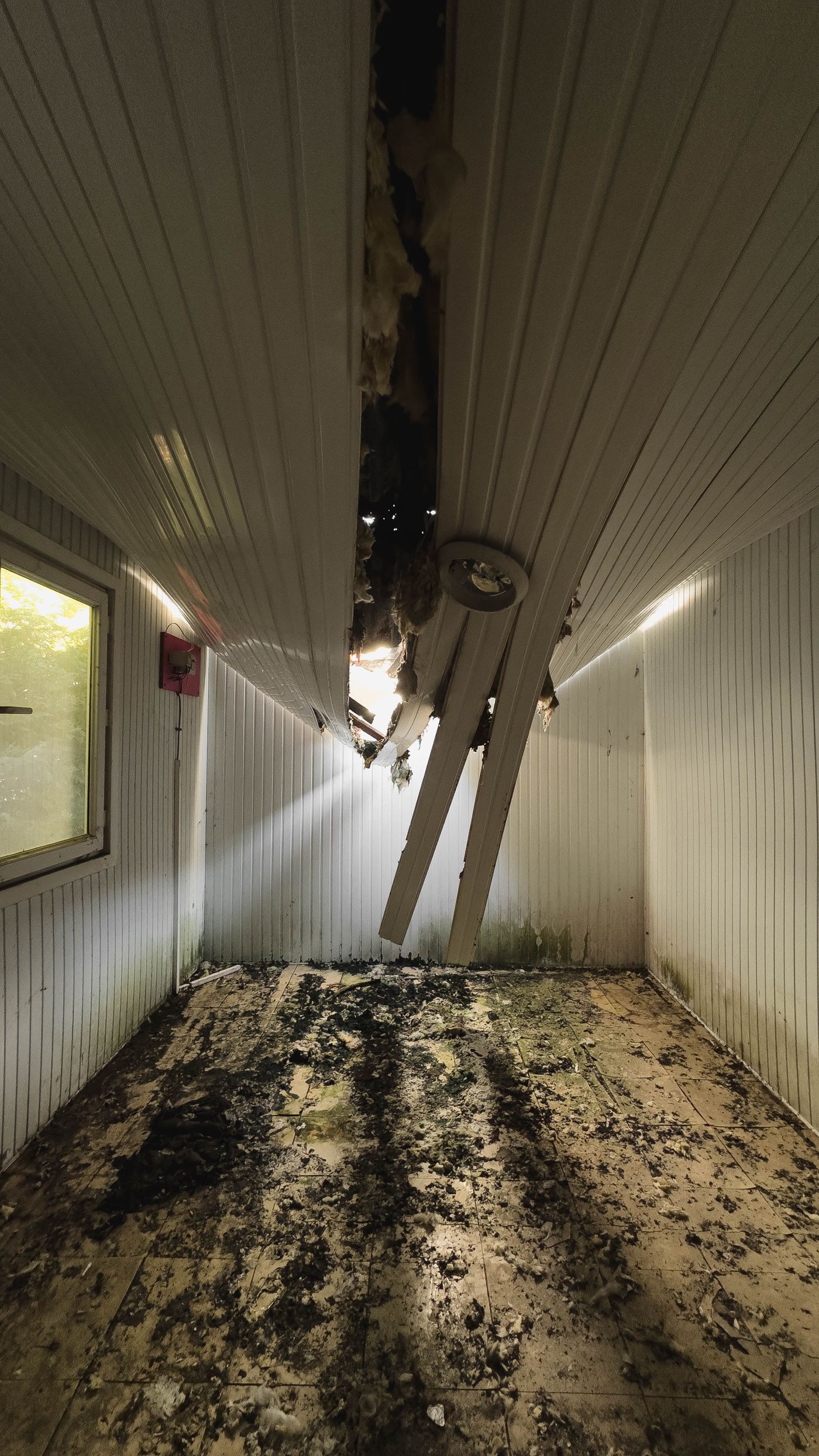 The puddle is the symptom. It’s almost never where the water got in
It’s usually the smell first.
You go down for a tote of Christmas decorations in April and something’s off — that damp, mineral smell that wasn’t there in January. Then you see the dark line along the bottom of the wall, or a puddle in the corner by the furnace, or the cardboard box that’s gone soft on the bottom.
And it only happens after a real rain. Which is why it’s easy to keep putting off.
Here’s the thing worth understanding before you spend any money: the spot where you find water is rarely the spot where water got in. Basement floors slope. Water travels along the footing, under the slab, and shows up wherever it finds the lowest opening. Chasing the puddle is how homeowners end up paying twice.
Start Outside, Not Inside
Most basement water in Michigan is a drainage problem before it’s ever a foundation problem. And drainage problems are cheap to fix compared to everything else on this page.
Go outside during the next real downpour — genuinely, stand out there with a jacket — and watch where the water goes.
Check your downspouts. A roof sheds an enormous volume of water. An inch of rain on an average house is over a thousand gallons, and every bit of it is aimed at four or five discharge points. If a downspout dumps at the base of the wall, you’ve built a pressure washer pointed at your foundation. Extensions should carry it at least six feet out, farther on clay soil.
Check the grade. The ground should fall away from the house — roughly six inches of drop over the first ten feet. Over decades, backfill settles and mulch beds get built up higher every spring until the yard tilts back toward the wall. This is the single most common cause we find, and it’s also the most commonly ignored, because a slope that’s wrong by two inches doesn’t look wrong.
Check the window wells. They fill, they hold water against the glass, and they leak. If there’s no drain in the bottom, or the drain has silted up, the well is functionally a bucket bolted to your foundation.
Check for pooling. Any low spot within ten feet of the house is a reservoir that soaks straight down to the footing.
If you fix the gutters, extensions, and grade and the basement stays dry, you’re done. That happens more often than the waterproofing industry likes to mention.
The Four Ways Water Gets In
 Where it appears and where it enters are two different questions
When outside drainage isn’t the whole story, it’s one of these.
The cove joint. That seam where the floor slab meets the wall isn’t sealed — it was never designed to be. When the soil outside is saturated, water under the slab has nowhere to go but up through that joint. If your water appears as a line along the base of the wall all the way around, this is almost certainly it.
Cracks in the wall. Poured foundations crack. Most vertical cracks are ordinary shrinkage and only matter because water uses them. A horizontal crack is a different conversation — that’s lateral soil pressure bowing the wall, and it’s structural, not cosmetic. Get that one looked at promptly.
Block wall saturation. Concrete block is hollow. The cores fill with water from below and the wall weeps through the mortar joints, sometimes well above floor level. Common in Michigan on anything built before the seventies.
Over the top of the wall. If the grade is high enough, water enters above the foundation, through the sill plate. You’ll see it high on the wall or running down from the rim joist. Usually a grading fix, occasionally a rot problem by the time anyone notices.
Why Waterproof Paint Doesn’t Work
Every hardware store sells a five-gallon bucket that promises a dry basement, and it’s genuinely tempting, because it’s forty dollars and a Saturday.
It fails for a reason that has nothing to do with the product quality.
Water in saturated soil isn’t sitting there politely — it’s under hydrostatic pressure, pushing against the outside of your wall with real force. A coating applied to the inside face is holding that back with nothing but its bond to the concrete. Pressure wins. The paint doesn’t stop the water; it just moves where the water appears, and often traps moisture in the wall where it does slow damage you can’t see.
The same logic applies to hydraulic cement pushed into a crack from the inside. It’s a plug in a pipe that’s still pressurized.
Sealing the inside face treats the wall as the problem. The wall isn’t the problem. The water table against it is.
There is a narrow case where interior coatings make sense — minor humidity and efflorescence in a basement with no active intrusion. If you have standing water after storms, that isn’t your situation.
What Actually Fixes It
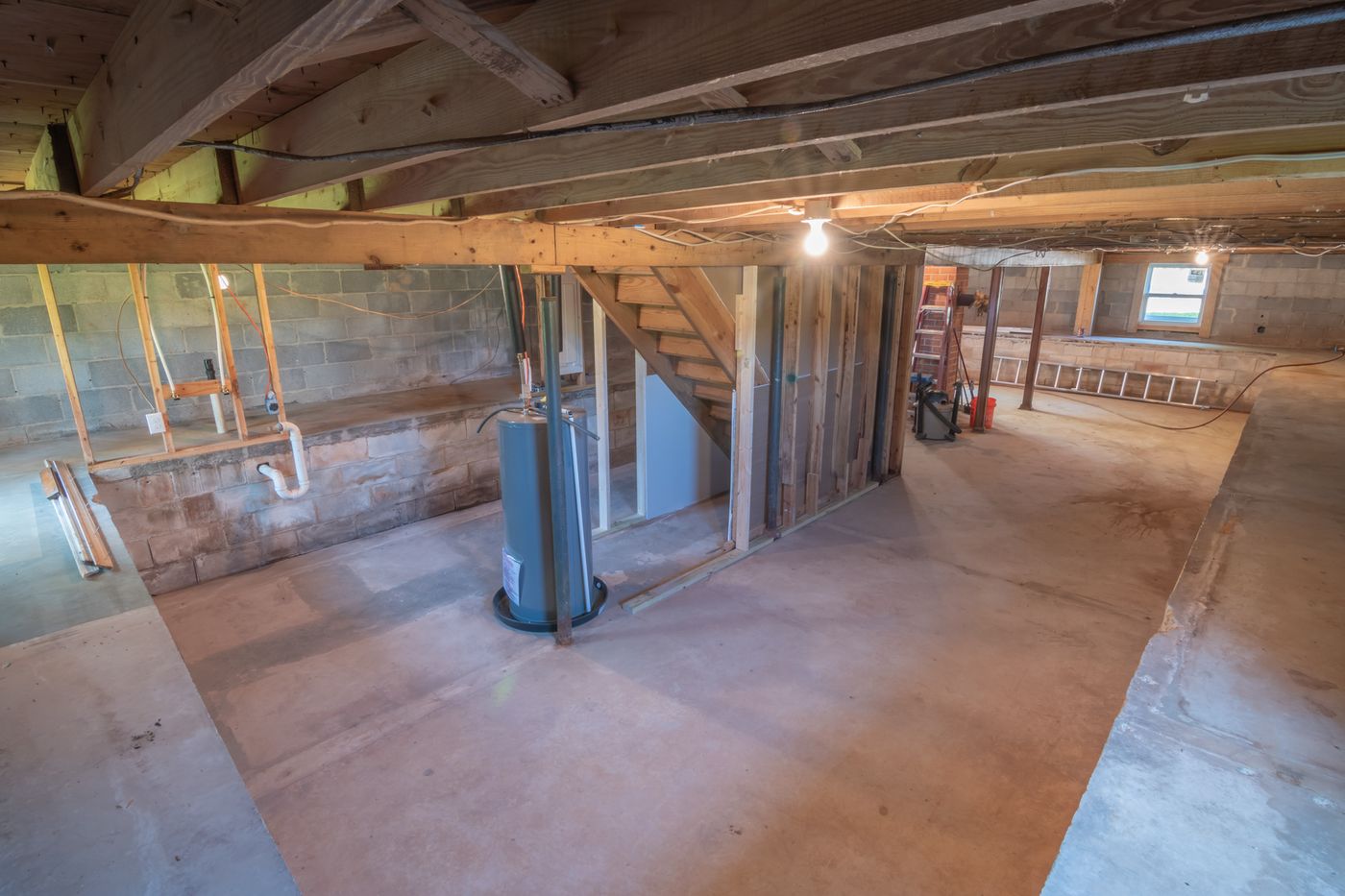 Manage the water first. Everything else is finish work
Real solutions relieve the pressure or redirect the water instead of trying to block it.
Exterior excavation and membrane. Dig to the footing, waterproof the outside face, replace the failed drain tile, backfill with clean stone. This is the most complete fix and the most expensive and disruptive one. It’s the right answer when the wall itself is compromised or the whole perimeter is failing.
Interior drain tile with a sump system. A channel cut around the inside perimeter at the footing, piped to a sump pit, pumped out and away. This doesn’t stop water reaching the foundation — it gives it somewhere to go before it reaches your floor. For most Michigan homes with cove-joint seepage, this is the practical answer, and it can be done without destroying the landscaping.
Crack injection. Polyurethane or epoxy injected through the full wall thickness, sealing from the outside face inward. Effective on isolated vertical cracks in poured walls. Not a fix for block, and not a fix for a wall with lateral movement.
A sump pump that actually works. If you have one, check it now rather than in the storm. Pour a bucket of water in the pit and confirm it kicks on and the discharge is clear. A battery backup matters more than people think, because the worst storms are exactly the ones that take the power out.
Grading and drainage correction. Boring, unglamorous, and often the entire fix. Always worth doing first.
Don’t Finish Over a Wet Basement
This is the expensive mistake, and it’s the one we get called about most.
A basement that’s dry in August is not a dry basement. Framing, insulation, drywall, and flooring installed over an unresolved water problem is a mold problem with a two-year fuse. Organic material plus intermittent moisture plus no airflow behind the wall is the exact recipe.
By the time it smells, the studs are involved. And now the repair includes tearing out everything you paid for.
The sequence isn’t complicated: manage the water, verify it stayed managed through a full wet season, then finish. Anybody willing to frame walls in a basement that floods without addressing the water first is selling you a demolition job you’ll pay for twice.
Frequently Asked Questions
It’s only a little water. Can I ignore it? Volume isn’t the risk. Moisture is. Chronic damp raises humidity through the whole house, feeds mold in framing and stored belongings, and in Michigan sets up freeze-thaw cycling against the foundation every winter. A small recurring puddle is a chronic condition, not a small problem.
Is standard homeowners insurance going to cover this? Groundwater seepage and surface water intrusion are excluded on nearly every standard policy — that’s what separate flood coverage exists for. A sudden failure, like a burst supply line or a water heater letting go, usually is covered. Sump pump failure is sometimes covered by a specific rider. Worth reading your declarations page before you assume either way.
Do I need to be there for an inspection? It helps a lot. You know when it happens, which corner, how long it takes to dry. That timeline narrows the cause faster than anything visible on a dry day.
How urgent is a horizontal crack? More urgent than a vertical one. Horizontal cracking with any inward bow means the wall is being loaded laterally by soil pressure. That’s a structural assessment, not a waterproofing question, and it shouldn’t wait for spring.
Can I just run a dehumidifier? It’ll help with humidity and it’s worth having. It will not do anything about water coming through the wall. Treat it as comfort equipment, not a repair.
My neighbor got an interior system and I got quoted exterior. Why the difference? Different failures. Two identical-looking houses can have different soil, different depths, different wall types, and different points of entry. Any quote that arrives before somebody has walked the exterior and asked when the water shows up is a guess with a price on it.
Find the Source Before You Buy the Fix
The useful first step isn’t picking a solution. It’s finding out where the water is actually entering — because that determines whether you’re looking at a Saturday with downspout extensions or a real project.
Kelly Construction has worked on Michigan homes since 1992. Licensed residential builder, fully insured, IICRC certified, BBB accredited. We walk the exterior, look at grade and discharge, inspect the foundation from the inside, and tell you honestly what it needs — including when the answer is a downspout and a wheelbarrow of dirt.
We handle both halves of this: drying it out, and finishing it properly once it’s dry.
Free, no-obligation basement inspection.
Call (248) 853-2800 or book an inspection online.
Serving all of Michigan, concentrated in Oakland, Macomb, Wayne, Lapeer, Livingston, and St. Clair counties.
Related: Basement finishing & waterproofing · Water mitigation · My gutter fell off the house · Get a quote
Have a leak, a stain, or a roof you're not sure about?
Kelly Construction has served Michigan since 1992. No-obligation inspections.